
Fostering curiosity and growth through guided, expert-led learning
Typical day
-
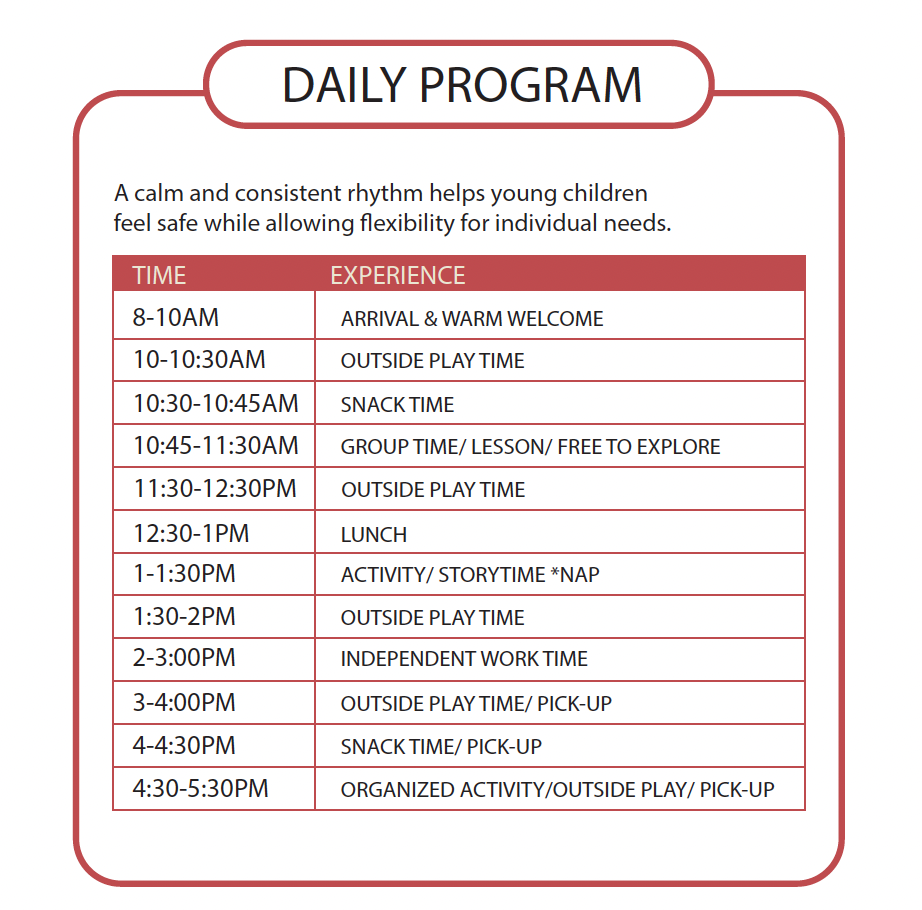
Outdoor time is an important part of every day at Big City Montessori. Our children have opportunities to run, climb, explore, play together, and enjoy fresh air while developing gross motor skills, confidence, and social connections. Just like inside the classroom, outdoor play encourages independence, curiosity, creativity, and learning through movement and exploration.
-
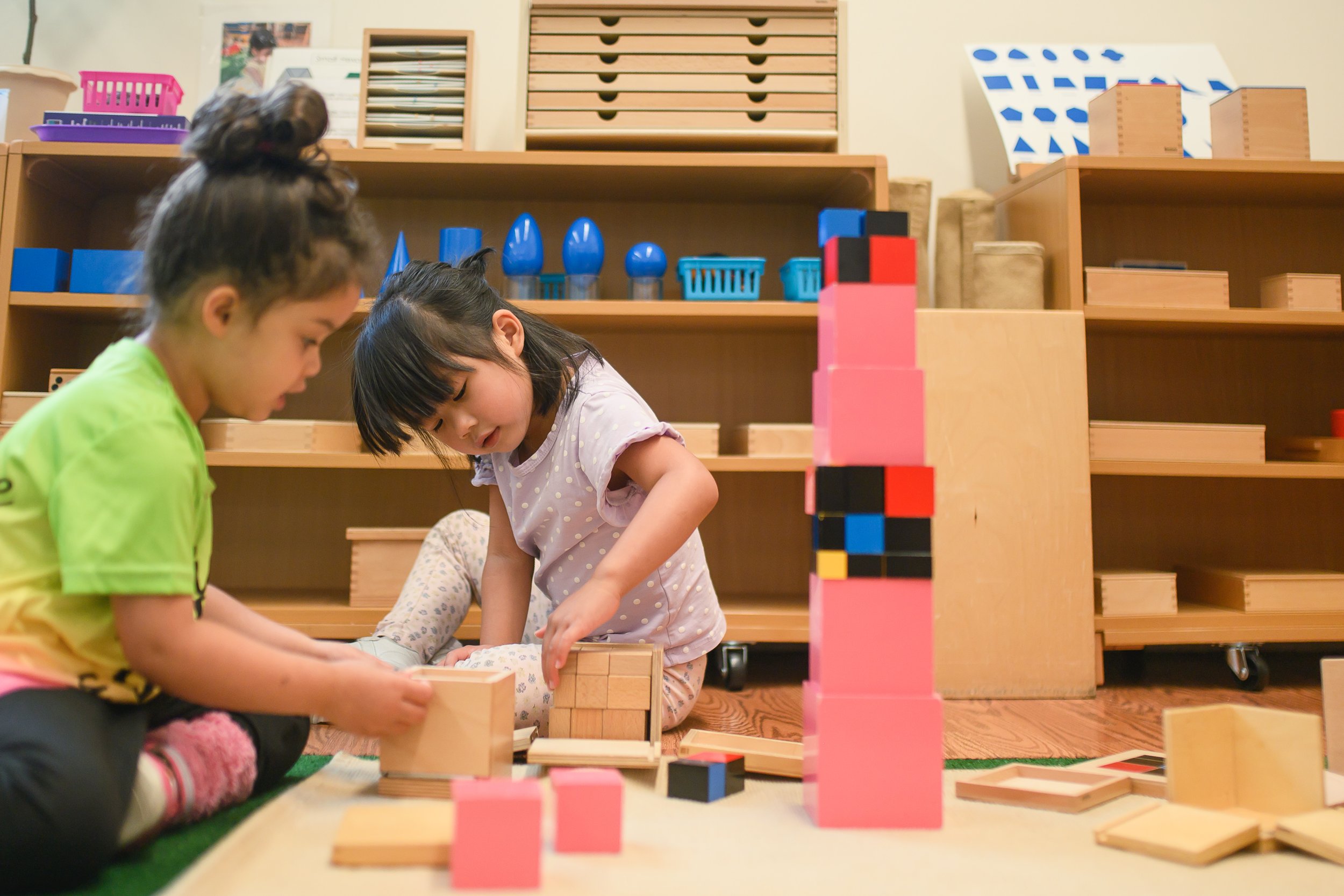
During uninterrupted work time, children are free to choose activities that spark their interest and work at their own pace. Teachers gently guide each child, encouraging independence, concentration, and a natural love of learning.
-
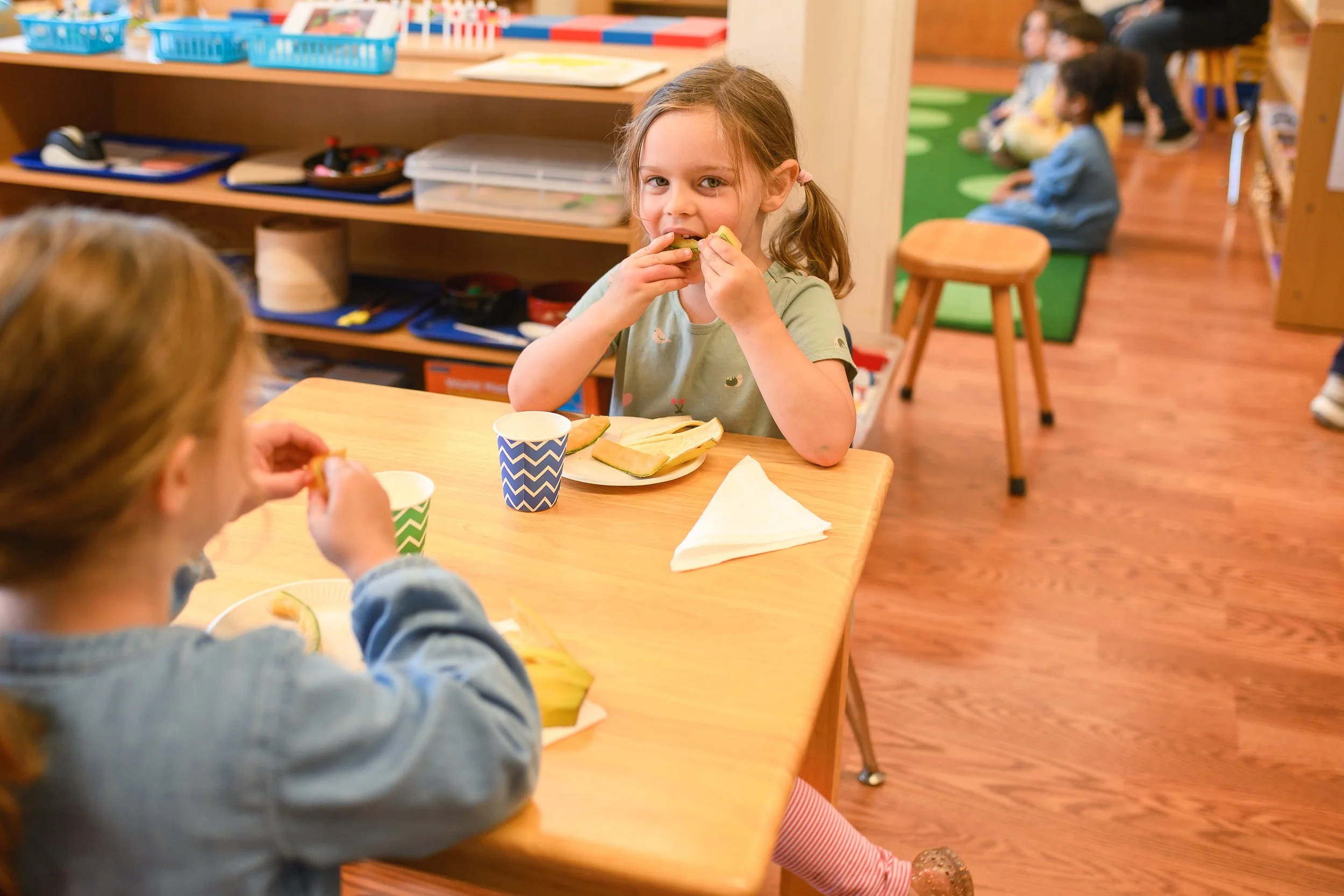
Mealtimes are a chance to slow down, connect, and practice independence. Children enjoy nutritious snacks and a hot lunch together while building everyday skills like serving themselves, cleaning up, and practicing table manners.
-
After lunch, children who need a nap are given a calm, comfortable space to rest and recharge. Nap time is optional, and children who do not sleep can enjoy quiet activities during this part of the day.
-
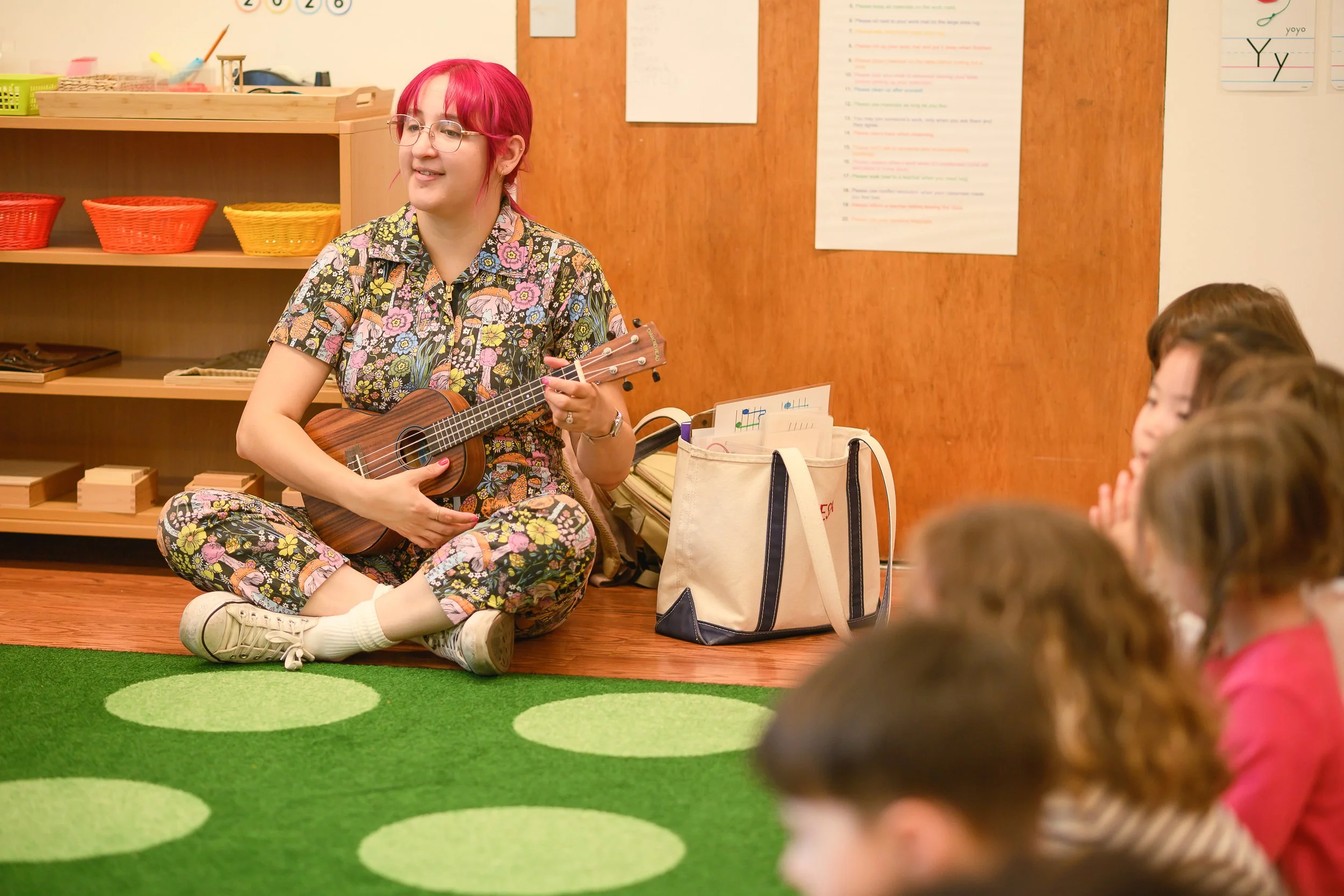
Our enrichment program brings even more opportunities for discovery into the school day through music, Spanish, yoga, and summer tennis. Throughout the year, we also welcome special guests from beekeepers and dancers to animal educators as well as parents who share traditions and experiences that are culturally meaningful to their families.
-
After the Montessori work day comes to a close, our thoughtfully curated after-care program continues with engaging activities, creative play, outdoor time, and opportunities to connect with friends in a more relaxed setting.
Sample schedule
BCMS opens at 8:00 a.m. and the day ends at 5:30 p.m
FULL DAY

Hallmarks of the Montessori Method
The Montessori method is based on the belief that children are naturally curious, capable, and eager to learn. Our classrooms are carefully prepared to support each child’s development while encouraging independence, confidence, concentration, and a lifelong love of learning.
Materials are placed on child-height shelves so children can choose activities, work at their own pace, and learn through hands-on exploration. The curriculum includes language, math, science, motor development, and social-emotional learning, using a combination of classic Montessori materials and teacher-created activities that grow with each child’s interests and developmental needs.

The Five Areas of Work in the Montessori Classroom
The Montessori curriculum includes five areas of work:

Practical Life
Practical LifePractical life activities instill care for self, for others, and for the environment. These activities include some of the daily routines the child has already observed at home: preparing food, washing dishes, and practicing accepted societal rules of grace and courtesy. Practical life activities serve to enhance muscular coordination, and to develop powers of concentration and control in the child that he will need for other work in the classroom.

Sensorial
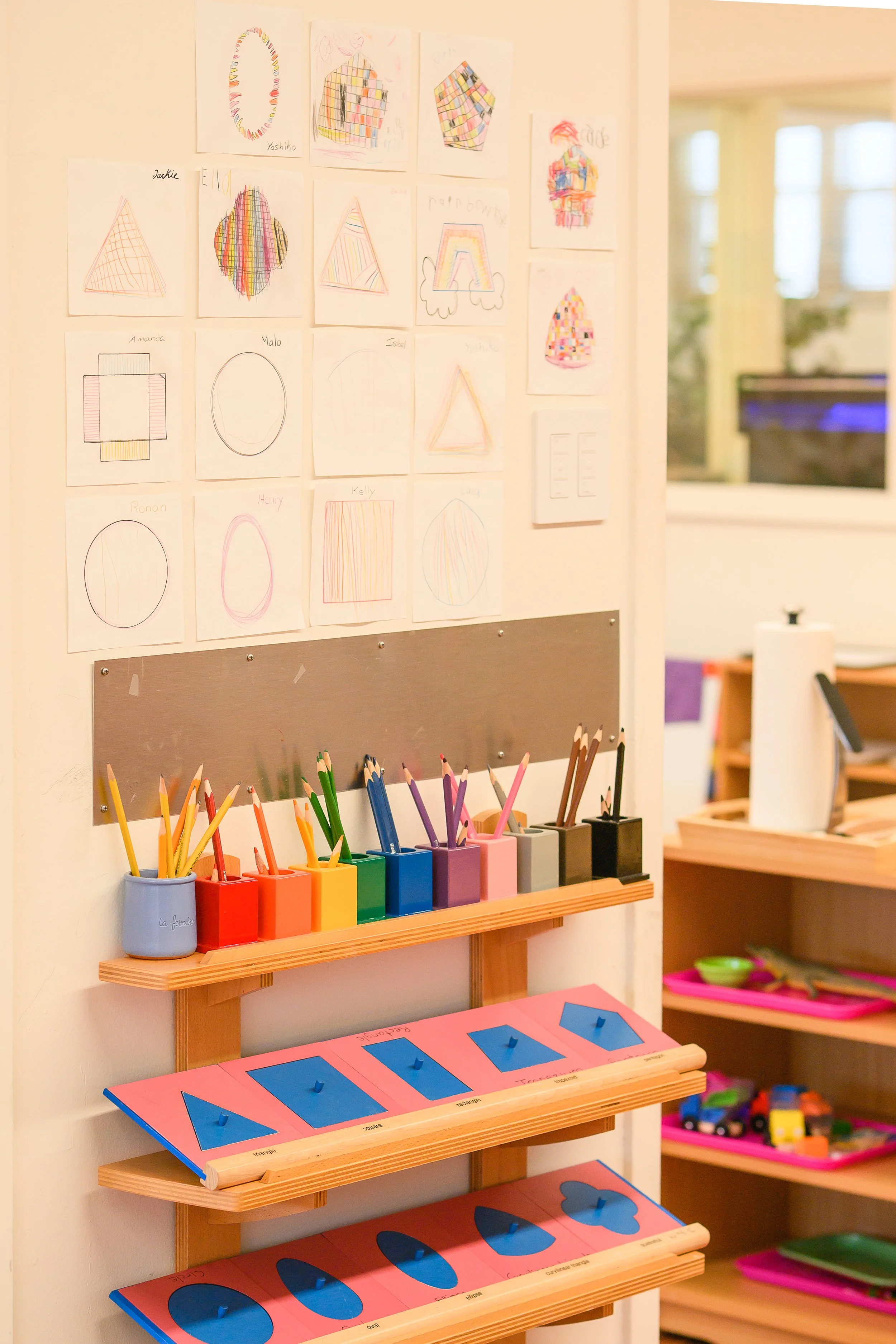
Sensorial materials are designed to develop cognitive skills, and to help children classify and order impressions by touching, seeing, smelling, tasting, listening, and exploring all the physical properties of their environment.

Language
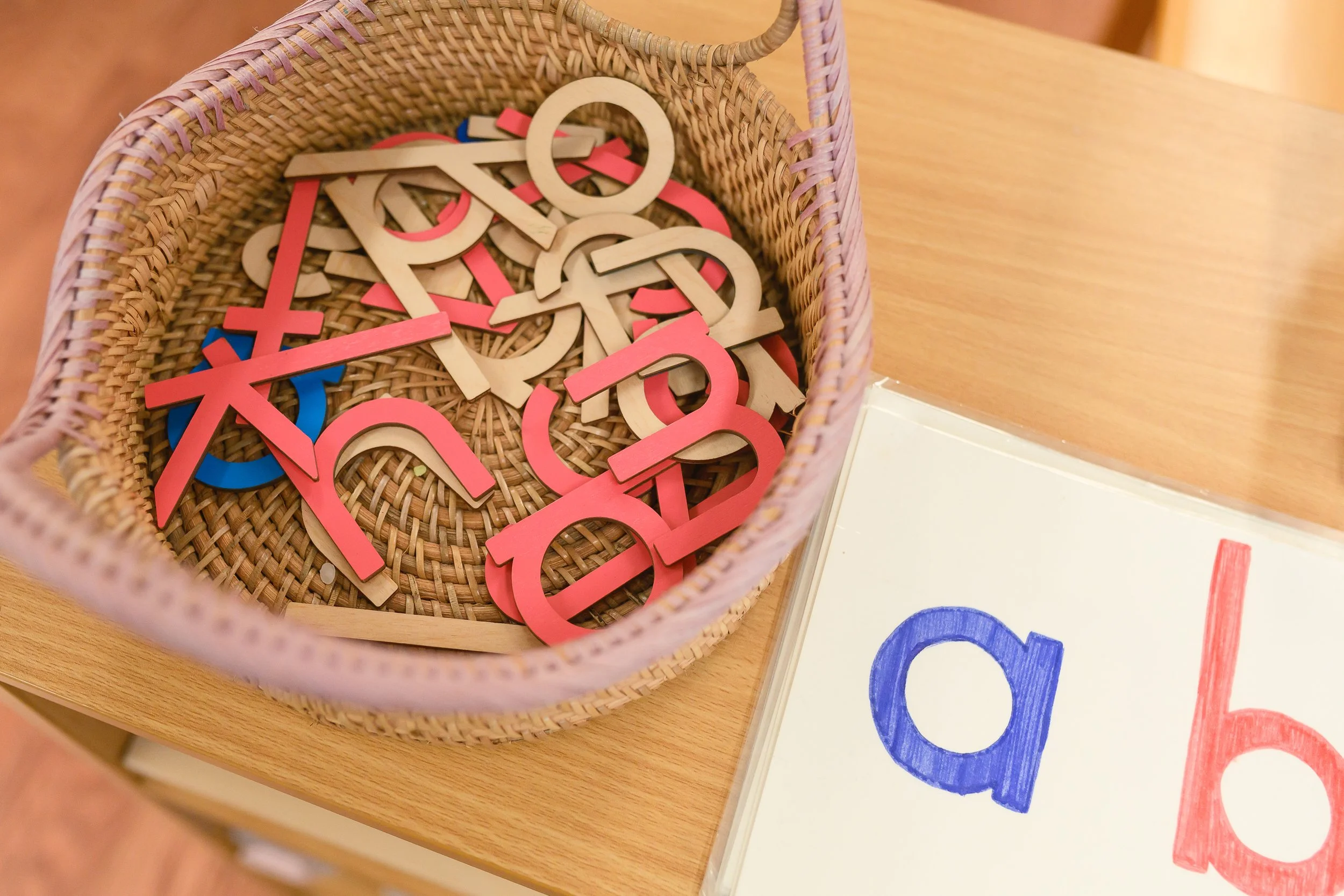
Language development is vital to all human development. The Montessori classroom is rich in oral language opportunities, allowing the child to experience conversation, poetry, and stories.Children effortlessly link sound to symbol while tracing sandpaper letters with their fingers, thus encouraging the natural progression of written expression and reading skills.

Mathematics
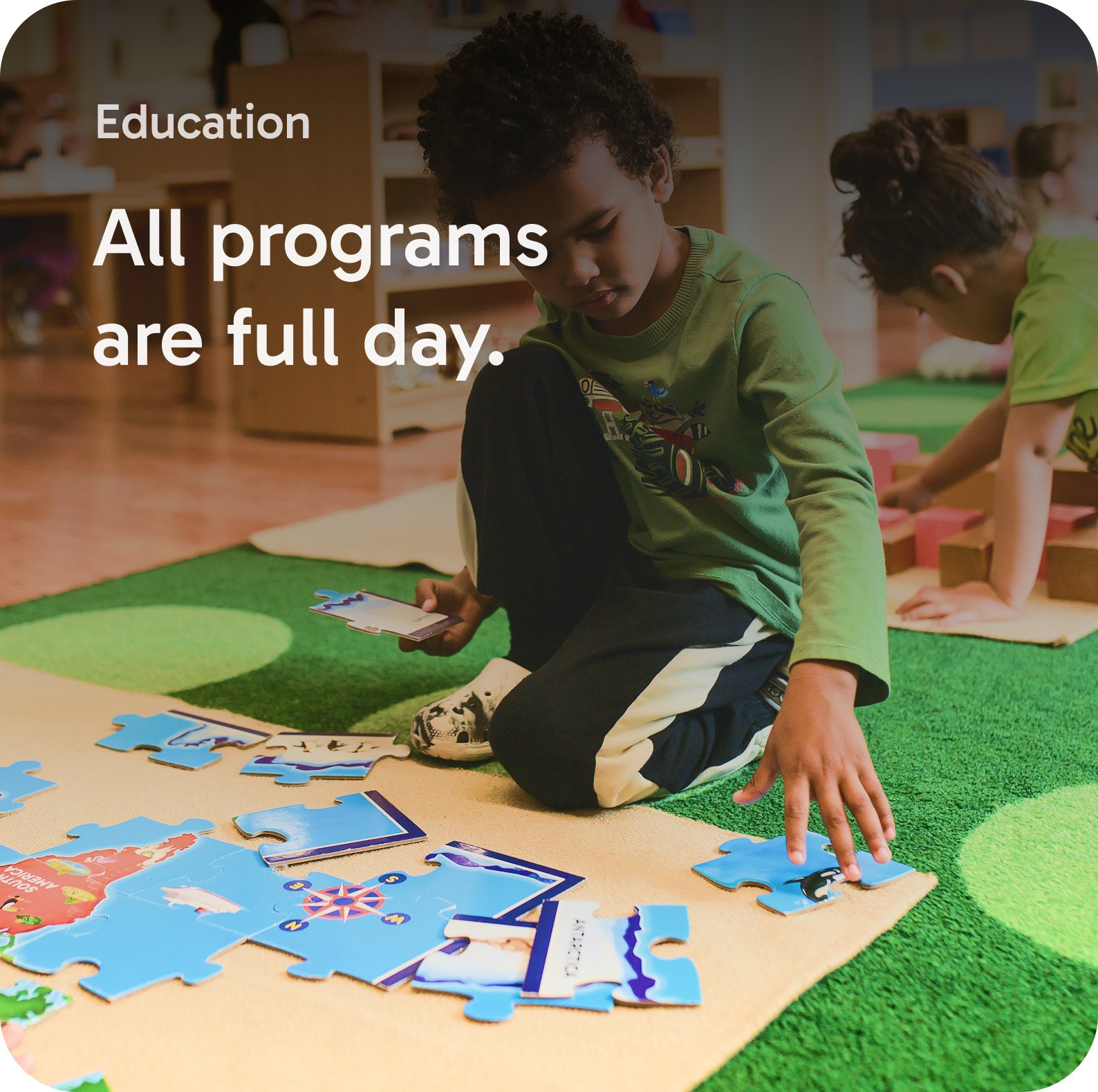
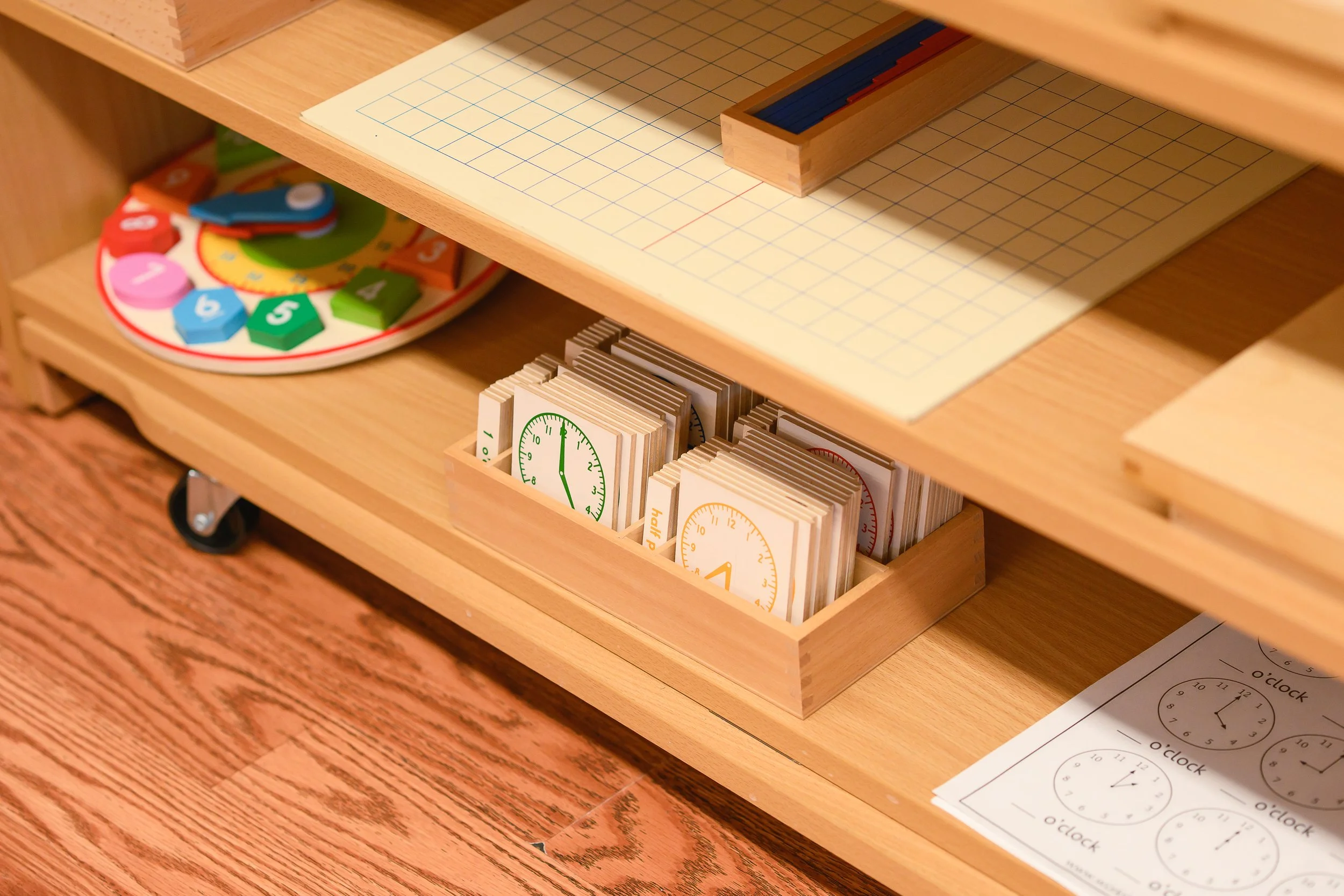
Mathematics activities help children learn and understand the concepts of math by manipulating concrete materials. The work helps children acquire a solid understanding of basic mathematical principles, and prepares them for later abstractive reasoning.

Language Extensions
Geography, science, nature, art, and music are integrated into everyday learning. These experiences help children appreciate different cultures, feel connected to the world around them, and express themselves creatively.
Enrichment
Enrichment programs add movement, creativity, language, and new experiences to the school week. Children enjoy music, Spanish, and yoga throughout the year, along with tennis during the summer, giving them new ways to explore their interests, build confidence, and have fun.
Learn more